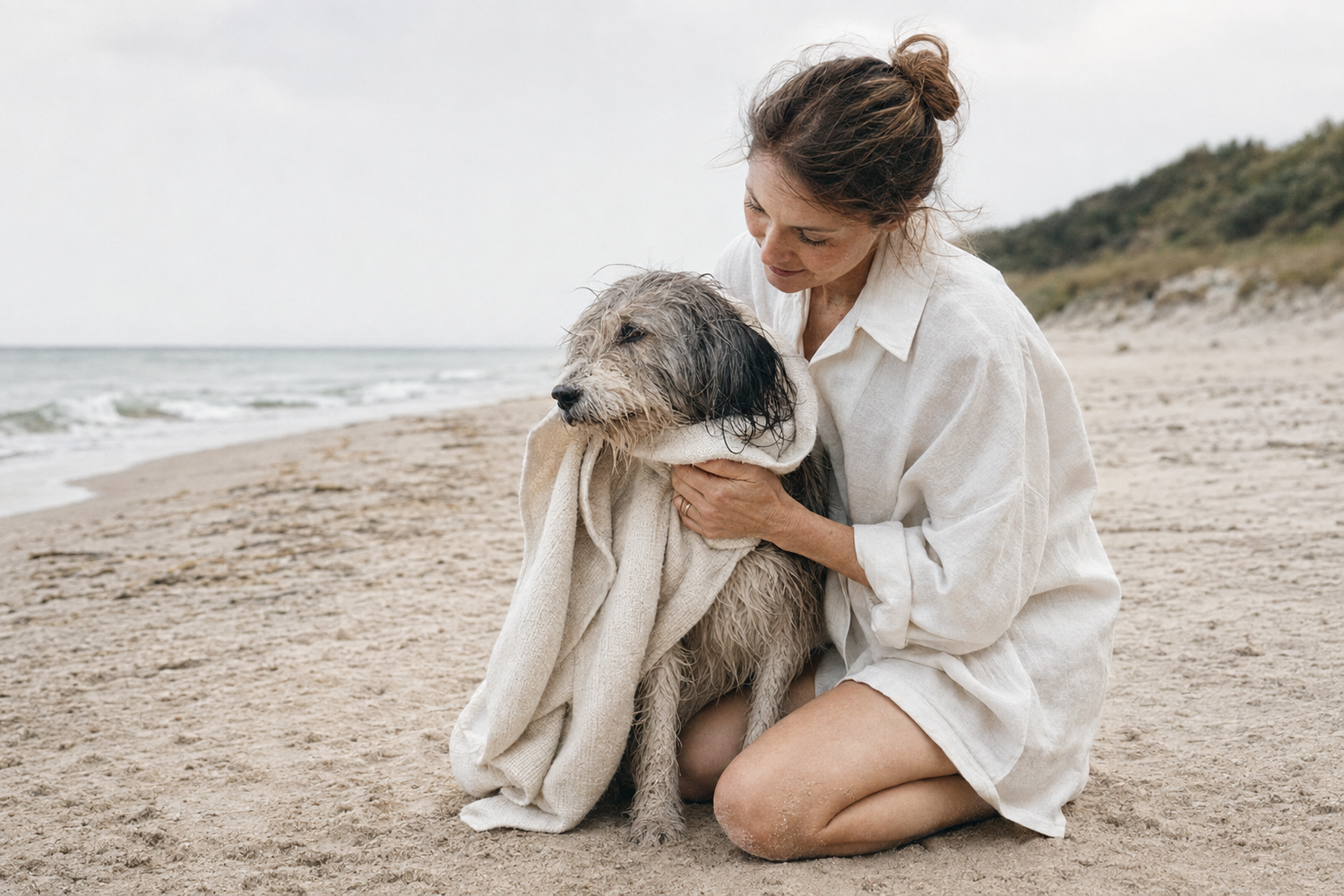
After a swim in the sea or a lake, don't leave wet fur to dry on its own. First, rinse your dog thoroughly with clean water, remove sand and plant debris, gently dry, and only then brush. Use shampoo when rinsing alone is not enough; choose a conditioner based on the length and condition of the fur.
Swimming together can be one of the best moments of summer. However, for a dog's fur, it means contact with salt, sand, mud, plants, and moisture retained close to the skin. A simple routine after getting out of the water helps reduce tangles, unpleasant odors, and discomfort, and allows for quick detection of irritations.
The sea and a lake require slightly different preparations, but the post-swim rule is the same: clean water, thorough drying, and gentle, tangle-free brushing.
In short
- Before entering, check the water quality and local dog regulations.
- Do not let your dog drink sea or lake water; bring fresh water from home.
- After swimming, rinse the entire body with lukewarm, clean water—including the belly, armpits, paws, and spaces between the toes.
- Use dog shampoo if there is residue, odor, mud, or greasy dirt.
- For long or tangle-prone fur, apply conditioner according to product instructions.
- Blot water with a towel; do not rub wet fur vigorously.
- Dry the outside of the ears and observe the skin for the next 24–48 hours.
Dog at the seaside: what do salt and sand do to fur?
Saltwater dries on the hair and skin, leaving residue. Together with fine sand, it can increase friction, irritate sensitive areas, and promote matting—especially behind the ears, under the armpits, on the belly, tail, and where a wet collar or harness lies.
After leaving the sea, don't wait for your dog to dry in the salt. If there's a shower on the beach, do an initial rinse immediately. At home, repeat more thoroughly, parting longer fur with your fingers so that water reaches the skin. Pay special attention to the paws and the spaces between the pads—that's where wet sand most easily remains.
Should shampoo always be used after the sea?
Not after every short dip in the water. If after a thorough rinse the fur and skin are clean, and the dog is not prone to irritation, fresh water alone may suffice. Dog shampoo is needed when there is noticeable residue, odor, greasy dirt, mud, or traces of substances found on the beach.
Do not use human shampoo, shower gel, or dish soap. After washing, rinse the product very thoroughly. Product residue left in thick undercoat can cause discomfort similar to leftover salt.
Dog in the lake: first assess the water
A lake does not contain salt, but this does not mean that all water is safe. Before swimming, check current water quality reports on the Sanitary Inspection Service's Bathing Water Portal, local markings, and regulations. Not all bathing areas allow dogs.
Do not let your dog into water that is unnaturally green, bluish, brownish, covered with foam or scum, looks like spilled paint, or has an unpleasant odor. This may indicate cyanobacterial blooms. Do not try to assess safety on your own based on others having entered the water.
After a safe swim in the lake, also rinse your dog. Clean water will help remove mud, sand, plant debris, microorganisms, and the smell of the body of water. Examine the skin, paws, and fur between the toes. Remove attached plant fragments and check for small cuts.
Sea or lake – how does grooming differ?
| Location | Main Challenge | What to do after swimming |
|---|---|---|
| Sea | Salt, sand, wind, and tangles | Rinse thoroughly with fresh water; check armpits, belly, paws, and areas under harness. |
| Lake | Mud, plants, water quality, and cyanobacteria risk | Check alerts before entering; after swimming, rinse and thoroughly examine skin. |
| Both | Moisture near skin, ears, and in thick undercoat | Gently dry, brush, and do not leave dog in wet harness for long. |
Post-swim routine step by step
1. Remove wet accessories
After exiting the water, remove the collar or harness if you can do so safely. Wet material clinging to the skin traps sand and moisture. Rinse accessories separately and dry them before putting them back on.
2. Rinse fur from skin to tips
Use lukewarm, not hot, water. Start from the neck and move towards the tail, avoiding eyes and the inside of the ears. For dense fur, work in sections and gently part the hair with your hand. Remember the belly, groin, armpits, and paws.
3. Assess if shampoo is needed
If clean water doesn't remove residue or odor, use a mild shampoo designed for dogs, chosen for their skin and fur type. With frequent holiday swims, don't automatically increase the frequency of full washing with cosmetic products. Observe the skin, follow product instructions, and for dermatological conditions, stick to the plan established with your veterinarian.
4. Add conditioner when fur tangles easily
Rinse-off conditioner is particularly effective for long, dry, wavy, or heavily undercoated fur. It facilitates subsequent detangling and helps reduce mechanical pulling. Apply it according to instructions, avoiding the eyes, and rinse thoroughly.
If you use a leave-in conditioner or detangling spray, apply the product to clean fur as per the label. Do not spray the cosmetic directly on the muzzle.
5. Blot water—do not rub
Allow the dog to shake off, then use an absorbent towel. Instead of vigorously rubbing, apply the material and gently blot water section by section. Strong rubbing of wet, long fur can create new tangles.
For very dense undercoat, a hairdryer set to cool or slightly warm air can be used, held at a safe distance and kept moving. Do not direct hot air to one spot. If the dog is afraid of the sound, do not force it—use towels and provide a warm, airy spot without drafts.
6. Dry the outside of the ears
Moisture after swimming can contribute to ear problems, especially in dogs with floppy ears. Use a soft towel or gauze to dry the pinna and the visible entrance to the ear canal. Do not insert cotton swabs deep into the ear. Use a drying or cleaning product only if it is intended for dogs and has been recommended for a specific animal by a veterinarian.
7. Only brush fur that has been prepared
First, separate larger tangles with your fingers. Then, brush small sections from the ends towards the base, holding the hair above the working area to avoid pulling the skin. If a mat is tight against the skin, do not blindly cut it with scissors—it's easy to injure the dog that way. It's safer to ask a groomer.
AFTER THE SWIM
Clean fur without tugging
After exposure to salt, sand, or lake mud, start with an abundant rinse. When a full wash is needed, choose a shampoo designed for dogs. For long and tangle-prone fur, complete the routine with a conditioner that will facilitate gentle detangling after swimming.
Choose a shampoo for your dog →See rinse-off conditioner →How to care for different fur types after swimming?
Short fur
Rinse and dry thoroughly, paying attention to the belly skin, armpits, and spaces between the toes. Short hair doesn't create spectacular tangles, but moisture and fine sand can still remain in skin folds or under harnesses.
Long or silky fur
Don't wait for matted clumps to dry completely before detangling. After rinsing, apply appropriate conditioner, blot water, and brush in small sections. First, check around the ears, armpits, groin, tail, and harness areas.
Dense undercoat
The most important thing is to dry the hair near the skin. From the outside, the dog might look dry, while the undercoat remains damp. Work with a towel in layers, part the fur, and—if the dog tolerates it—use a gentle airflow.
Fur prone to irritation
Limit the number of cosmetic products and choose mild formulas designed for dogs. If after swimming redness, persistent scratching, pimples, an unpleasant skin odor, or a moist, painful spot appears, stop home experiments and consult a veterinarian.
When is a vet needed after swimming?
Observe your dog after returning, especially if it swallowed a lot of water or swam in an area of questionable quality. Urgent contact with a clinic is required for:
- vomiting, diarrhea, excessive drooling, or marked weakness,
- unsteady gait, disorientation, tremors, convulsions, or difficulty breathing,
- severe itching, extensive redness, swelling, or painful skin,
- head tilting, intense ear flapping, pain, discharge, or unpleasant ear odor,
- coughing, shortness of breath, or distress after aspirating water,
- any sudden change in behavior after swimming in the sea or a lake.
In case of suspected cyanobacteria, do not wait for symptoms to develop. Contact a veterinarian immediately after exposure.
What to bring to the water with your dog?
| To the bag | Why? |
|---|---|
| Fresh water and bowl | To prevent the dog from drinking sea or lake water. |
| Life vest | For safety on a boat, SUP, in waves, and for weaker swimmers. |
| Two towels | One for initial drying, the other for thorough moisture blotting. |
| Brush or comb | To remove plant debris and gently untangle after rinsing. |
| Separate, light harness | The wet set can be removed, rinsed, and dried. |
| First aid kit and clinic number | For cuts and situations requiring quick consultation. |
If the day by the water is also hot, read the related guide: How to protect your dog from heat? Walking, water, and paw care in summer. We also expand on the daily routine after returning in the article How to care for your dog's hygiene at home?.
FAQ — frequently asked questions
Does a dog need to be washed after swimming in the sea?
After every outing from the sea, thoroughly rinse your dog with clean, lukewarm water to remove salt and sand. Shampoo is not mandatory after every short dip. Use it when rinsing alone does not remove residue, odor, or dirt.
Does a dog need to be rinsed after a lake?
Yes. Rinsing helps remove mud, sand, plant fragments, and other impurities. Always check water quality and local warnings before entering.
How to dry a dog after swimming?
Allow the dog to shake off, then blot water with an absorbent towel without vigorous rubbing. Thick undercoat can be dried with cool or slightly warm air from a safe distance if the dog tolerates a hairdryer well.
Can a dog be allowed to drink sea or lake water?
No. Bring fresh water and a bowl. Do not allow your dog to drink from the body of water and take breaks from retrieving from the water to limit swallowing it during play.
What to do if a dog has had contact with cyanobacteria?
Do not allow it to lick its fur. Immediately rinse the dog with clean water, protect your own hands, and urgently contact a veterinarian. Do not wait for symptoms.
When is dog conditioner needed after swimming?
Conditioner is especially useful for long, dense, dry, or tangle-prone fur. It facilitates brushing after washing and reduces pulling. Use it according to the manufacturer's instructions.



Leave a comment
This site is protected by hCaptcha and the hCaptcha Privacy Policy and Terms of Service apply.