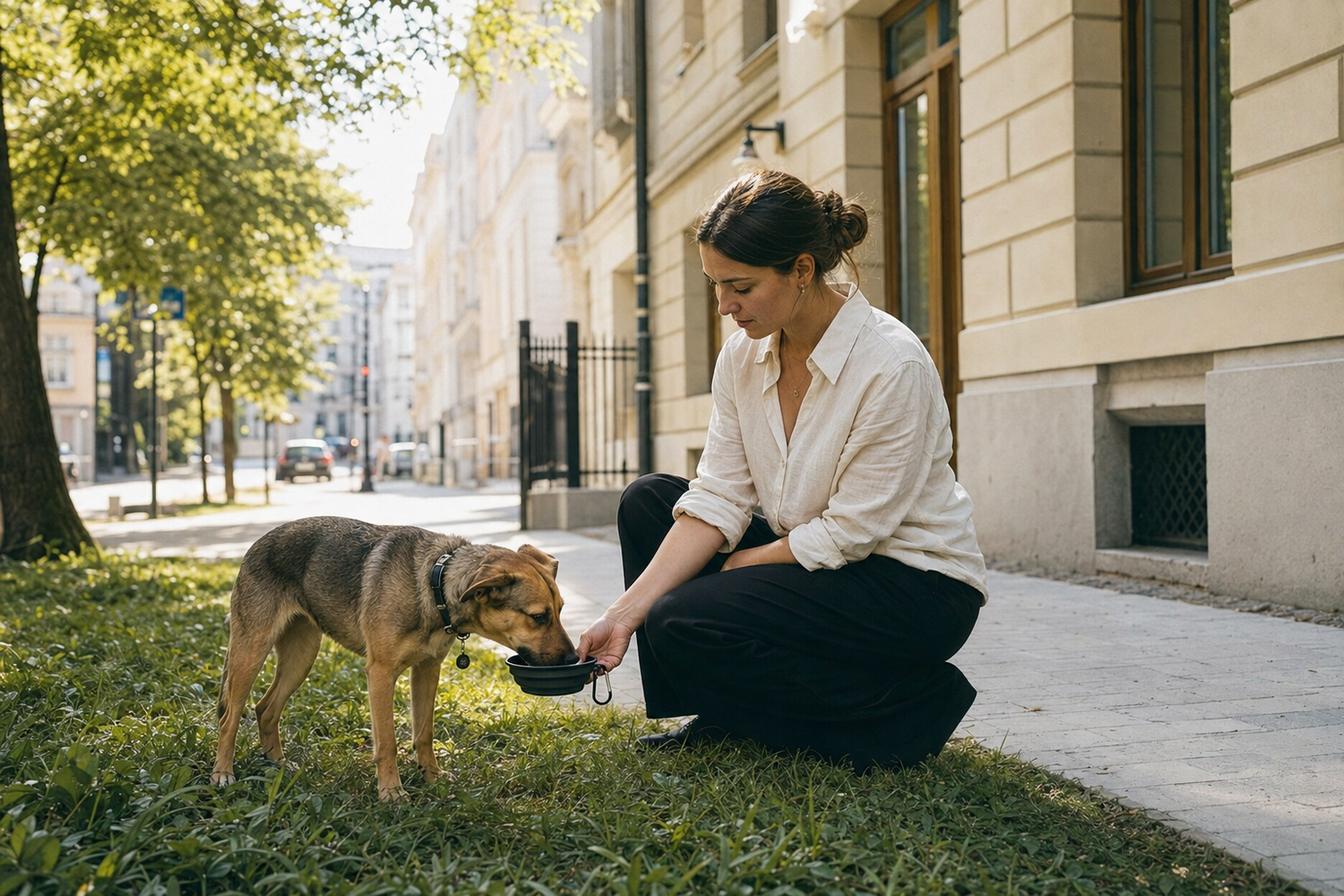
On a hot day, a simple walk can be a big burden for a dog. Three things are most important: a cool time for going out, constant access to fresh water, and avoiding hot asphalt. Cosmetic paw care complements this routine but never replaces protection from high temperatures.
Dogs don't cool down as effectively as humans. They primarily release heat by panting, and their sweat glands are mainly located in their paw pads. Therefore, intense activity, high humidity, lack of shade, and hot surfaces can quickly lead to overheating.
However, you don't have to give up the whole day together. Simply change your rhythm: a longer walk at dawn or late in the evening, short outings during the day, water always at hand, and a calm routine after returning home.
In short
- Go out early in the morning or late in the evening and shorten activity during the hottest part of the day.
- Choose shade, grass, and earth instead of asphalt, paving stones, or hot sand.
- Carry fresh water and a portable bowl; allow your dog to drink regularly, without forcing.
- Never leave your dog in a parked car — even with a window slightly open.
- After the walk, check the paw pads. You can apply a thin layer of conditioning balm to clean, dry, and undamaged skin.
- Severe panting, excessive drooling, weakness, unsteady gait, vomiting, or collapse require immediate action and contact with a veterinarian.
Why is heat dangerous for dogs?
Panting helps dogs dissipate heat, but its effectiveness decreases when the air is very hot and humid. Additionally, the ground temperature can be noticeably higher than the forecast. This is the height at which a small dog's entire body is, and its paw pads directly touch the heated surface.
The risk does not depend solely on the temperature. Sun, humidity, wind, the length and pace of the walk, access to shade, and the individual dog's condition also matter. Therefore, there isn't one temperature at which every dog should stay home. During hot weather, it's worth observing the conditions and the animal's behavior, not a training watch or step count plan.
Which dogs require special caution?
Brachycephalic breeds, i.e., dogs with short, flattened muzzles—including Pugs, French Bulldogs, English Bulldogs, Shih Tzus, and Boxers—are more susceptible to overheating. Greater caution should also be exercised with puppies, seniors, overweight dogs, dogs with very thick coats, and those with heart or respiratory system diseases.
If the dog has a chronic illness, is taking medication, or has previously suffered from heatstroke, the individual plan for hot days should best be established with a veterinarian.
Walking your dog in the heat: change the time, pace, and route
1. Plan the longest outing at dawn
Early morning is usually the coolest part of the day. Late evening can also be a good choice, but asphalt may radiate heat accumulated during the day for a long time. At midday, limit your walk to a short physiological outing in the shade.
2. Give up running, cycling, and intense play
High temperatures are not a good time for fetching, jogging, speed training, or cycling with your dog. The dog may want to continue playing despite increasing overheating. At home, it's better to offer calm scent exercises, a licking mat, or a short command training session.
3. Choose a route where your dog can walk on grass
A park, a shaded alley, and damp earth are better than an open square, cobblestones, or asphalt. In the city, only cross to the sunny side of the street if necessary. Take breaks and let your dog set a calmer pace.
4. Muzzle must not prevent panting
If a dog must wear a muzzle, it should be a properly fitted basket model that allows it to open its mouth wide, pant, and drink water. A tight veterinary muzzle that closes the mouth is not suitable for a normal walk — especially during hot weather.
Hot asphalt and dog paws
Pavement temperature can be significantly higher than the air temperature. A simple indicative test involves placing the back of your hand on the surface for about five seconds. If you cannot hold your hand without significant discomfort, the surface is too hot for dog paws. This test does not replace common sense but helps to quickly assess conditions.
During the walk, pay attention to any change in gait. Alarming signs include:
- sudden lameness or refusal to walk further,
- intense licking or biting of paws,
- redness, blisters, or change in paw pad color,
- abrasions, torn paw pad surface, or visible pain.
Water for dogs in hot weather
Dogs should have constant access to clean, fresh water both at home and outdoors. Bring your own bottle and a collapsible bowl on walks. Offer water regularly in the shade, especially after exertion, but do not force your dog to drink.
Do not assume that a public fountain, puddle, or pond will be a safe source. Standing water may contain microorganisms or toxins, and salty seawater is not suitable for quenching thirst. It is safest to bring a supply from home.
How to help your dog rest at home?
- provide a cool, shaded, and well-ventilated area,
- cover windows on the sunny side and allow the dog to lie on a cooler floor,
- use cooling mats according to instructions and check if they heat up after a long time,
- a damp towel can be placed under the dog, but should not be wrapped around or covering an overheated animal,
- do not force the dog to interact with water if it does not like a pool or sprinkler.
Symptoms of overheating and heatstroke in dogs
The first signs can easily be mistaken for ordinary fatigue. Observe your dog during the walk, not just after returning home. Alarming signs include:
- very intense or uncontrolled panting,
- excessive drooling,
- pronounced weakness, drowsiness, or restlessness,
- unsteady gait, lack of coordination, or disorientation,
- vomiting or diarrhea,
- collapse, loss of consciousness, or seizures.
Even if the dog looks better after a while, it still requires consultation. Complications of overheating can affect internal organs and are not always immediately visible.
Paw care after a summer walk
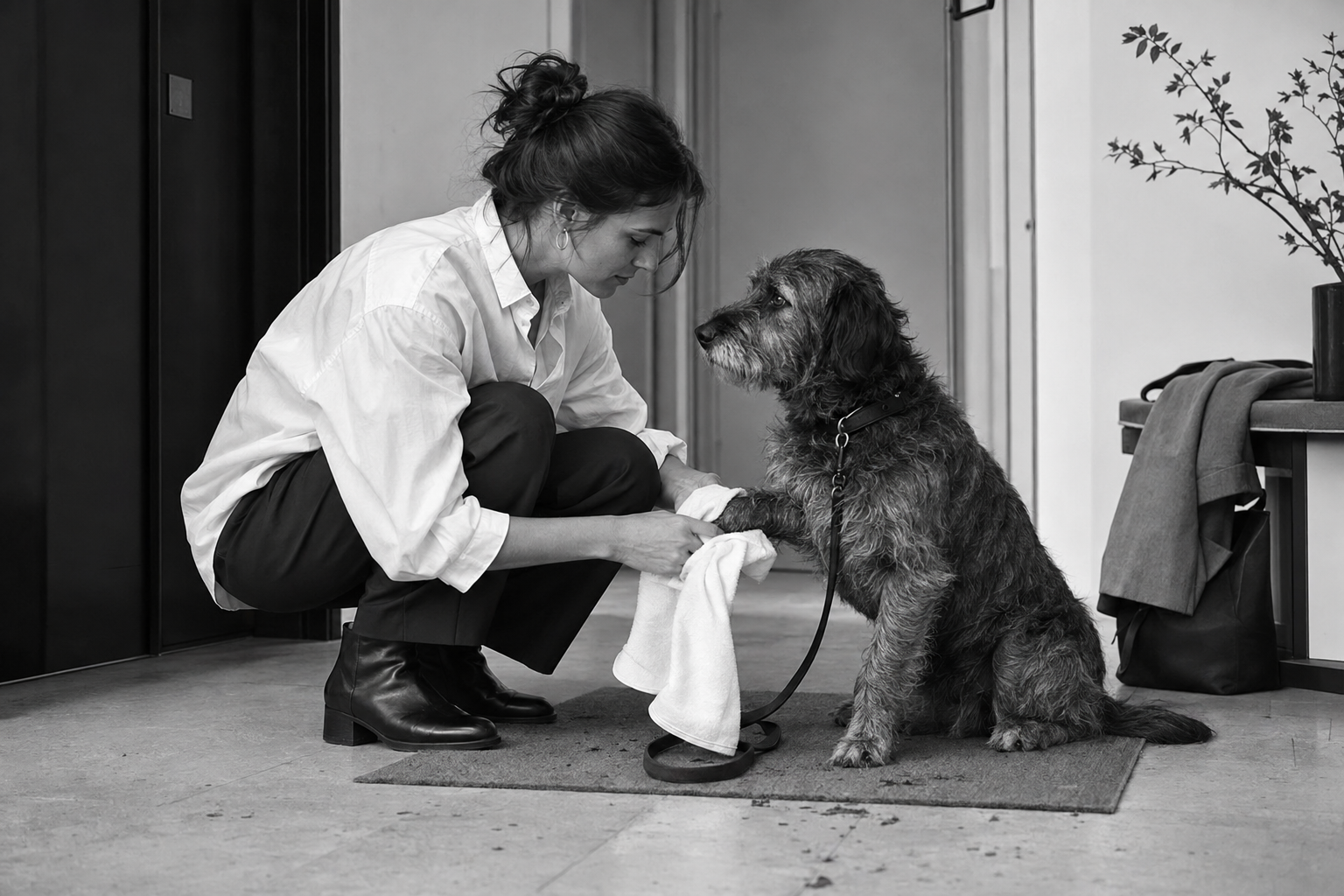
Upon returning, start by examining the paw pads and the spaces between the toes. Remove sand, small stones, and dust. If the paws are dirty, rinse them with lukewarm water or use a product designed for dog paw care, then dry them thoroughly with a soft towel.
A thin layer of conditioning balm can be applied to clean, dry, and undamaged skin. This ritual helps keep the paw pad skin soft and well-maintained after contact with dry ground, dust, or sand.
However, balm is not a shoe or a thermal filter. It does not allow for safe walking on hot asphalt and does not prevent burns. The most important protection remains a cool walking time, grass, shade, and surface control.
You can read more about daily paw pad care in the article: Paw and Nose Balm for Dogs — How to Protect Paw Pads in Winter and Summer?. Also, see the guide How to care for your dog's hygiene at home?.
After the walk
A calm ritual for well-cared paws
PetsChoice.Club Paw and Nose Conditioning Balm has been created for regular use on clean, dry, and undamaged skin. It supports daily paw pad care after walks and helps maintain a feeling of softness.
Do not use on irritated or damaged skin. The product does not provide protection against high surface temperatures.
View paw and nose balm →Summer checklist before going out
| Check | Before you go out |
|---|---|
| Time | Choose early morning or late evening. |
| Surface | Touch the pavement and plan a route in the shade and on grass. |
| Water | Bring your own water and a lightweight, collapsible bowl. |
| Pace | Avoid running, cycling, and intense fetching. |
| Dog | Consider age, body weight, muzzle structure, and health condition. |
| Return | Provide a cool place, rest, and paw pad inspection. |
FAQ — frequently asked questions
At what temperature should I not walk my dog?
There is no single limit suitable for all dogs. Humidity, sun, wind, ground temperature, walk duration, and the dog's condition also affect the risk. On a hot day, a longer walk is best planned at dawn, and at midday, limit outings to a minimum.
How to check if asphalt is too hot for a dog?
Place the back of your hand on the surface for about five seconds. If you cannot hold your hand without discomfort, do not walk your dog on it. Choose grass, shade, or postpone the walk.
Does balm protect a dog's paws from hot asphalt?
No. Balm supports paw pad skin care but is not thermal protection and does not prevent burns. It cannot be used as a justification for walking on a heated surface.
Can I put a wet towel on an overheated dog?
Do not cover or wrap an overheated dog with a wet towel, as the material can trap heat. Begin cooling with water cooler than body temperature, ensure air circulation, and immediately contact a veterinarian.
Should I clip my dog's fur very short in summer?
Not always. Fur can partially insulate the skin and protect it from the sun. Instead of self-shaving, regularly brush out dead undercoat and mats, and consult an experienced groomer or veterinarian about the decision to short-clip.
Which dogs tolerate heat worse?
Brachycephalic breeds, puppies, seniors, overweight dogs, dogs with very thick coats, and those with heart or respiratory system diseases require special caution.

Leave a comment
This site is protected by hCaptcha and the hCaptcha Privacy Policy and Terms of Service apply.