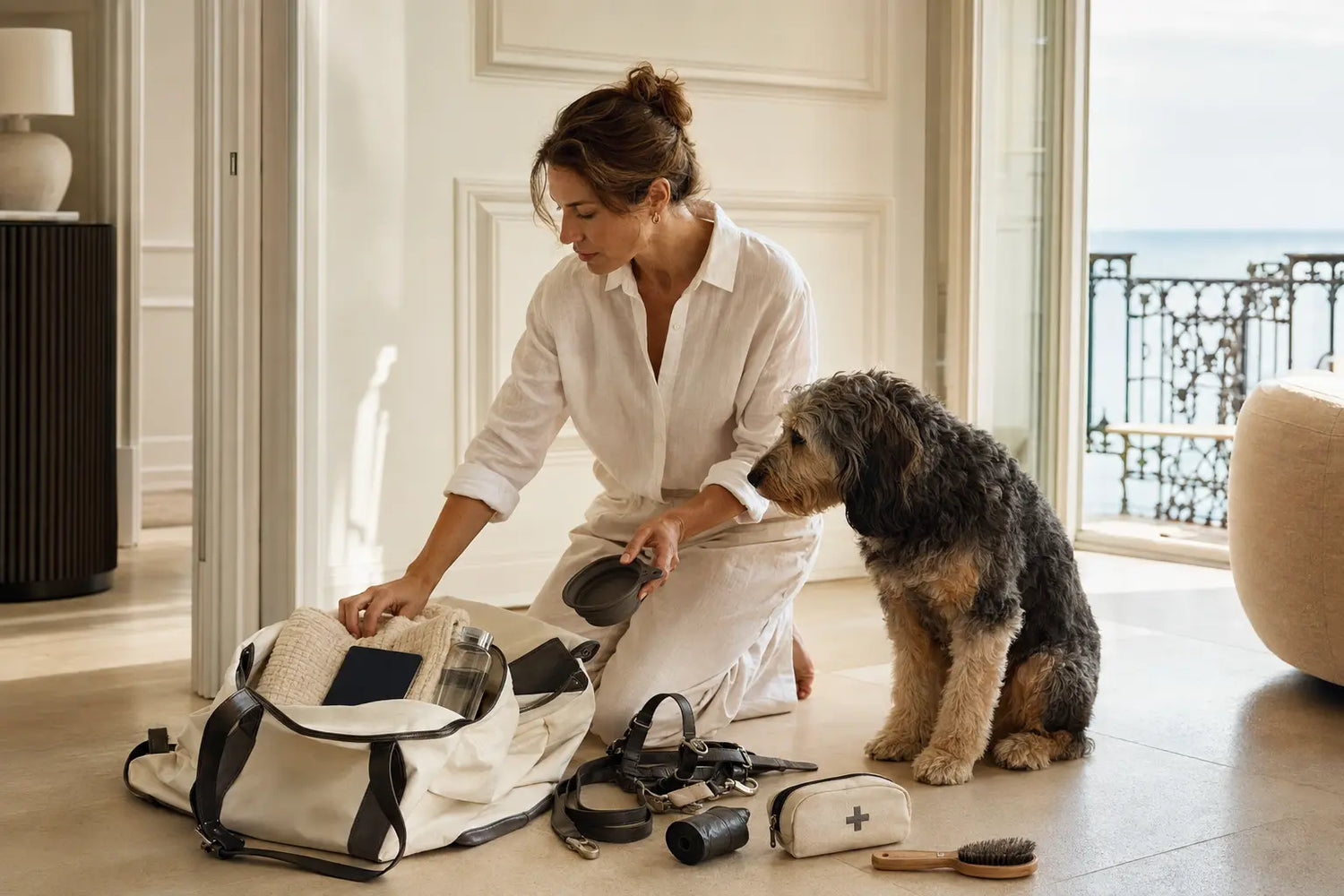
The best packing list for a trip with a dog doesn't start with a toy or a towel, but with safety: documents, identification, water, familiar food, and transportation. Only then do we pack comfort and care items to ensure that sand, mud, and long walks don't come back with us to the hotel room.
Joint holidays can be very simple if your dog's bag addresses five real situations: document checks, travel delays, an emergency vet visit, a change in weather, and returning from a muddy walk. Below you'll find a complete packing list for travel within Poland and additional points to check before crossing the border.
In short: 12 essentials you shouldn't travel without
- passport or health book and copies of important documents,
- collar with up-to-date phone number and a checked microchip,
- leash, well-fitting harness, and a spare clasp,
- carrier, crate, or car safety harness,
- food for the entire stay with a small reserve,
- fresh water, bottle, and collapsible bowls,
- regularly taken medications in original packaging,
- basic first aid kit and contact details for a local vet clinic,
- poop bags, towel, and protective mat,
- blanket or bed smelling of home,
- brush and grooming products suitable for fur and paws,
- confirmation of carrier and accommodation rules.
First, check if this trip will be good for your dog
Not every dog rests well during travel. Long car rides, flights, heat, crowds, stairs, and new places can be especially challenging for puppies, seniors, anxious dogs, brachycephalic breeds, or those with chronic illnesses. If your dog doesn't tolerate car rides well, has breathing problems, heart issues, or mobility difficulties, discuss the plan with your veterinarian before booking.
Also check the conditions at the destination: whether the facility accepts a dog of a given size, whether there is a fee, whether it requires the dog to be on a leash, where the nearest 24-hour veterinary clinic is located, and whether the beach or trail is truly dog-friendly. Written confirmation of accommodation conditions saves an unpleasant surprise upon arrival.
1. Documents and dog identification
Travel within Poland
In your handy pouch, include your dog's health book, a list of medications taken, policy number if the dog is insured, and details of your regular vet clinic. Take clear photos of the documents and save them offline as well. Check if the phone number on the tag is current and if the owner's data assigned to the microchip needs updating.
Holidays with your dog abroad
For private travel between European Union countries, a dog must generally be microchipped, have a valid rabies vaccination, and a European passport issued by an authorized veterinarian. The chip should be implanted or scanned before the vaccination recorded as the basis for travel. After the first vaccination, validity begins no earlier than 21 days; interruption of booster doses may mean having to wait again.
2. Food, water and bowls
Pack familiar food for the entire stay and a reserve for at least one extra day. A sudden change of product during stressful travel can result in stomach problems, and veterinary or allergy-specific food may not always be available locally. Divide portions by day, but keep a photo of the label with ingredients, name, and dosage.
In the car cabin or carry-on luggage, put a separate supply of water and a collapsible bowl. Do not assume that the first station, beach, or platform will provide a safe source. In hot weather, offer water regularly, take breaks in the shade, and never leave your dog alone in a parked car — even with a window slightly open.
| Food and Drink | How to pack? |
|---|---|
| Basic food | Portions for the entire stay + small reserve for delays. |
| Treats | Small, well-known; useful for calmly adapting to new situations. |
| Water for the journey | In an easily accessible bottle, not at the bottom of the main suitcase. |
| Two bowls | Separate for water and food; a collapsible option will work well on the road. |
| Diet and allergies | Record of recommendations, food ingredients, and a list of foods the dog cannot eat. |
3. Leash, harness and safe transport
Take your main leash, a well-fitting harness, and a simple spare set. In a new place, your dog might react differently than in a familiar neighborhood, so it's better to take the first walks on a leash or a long line. The ID tag should include a phone number with the country prefix, e.g., +48.
Car
Polish regulations do not specify one mandatory type of equipment for dogs, but the animal must not obstruct visibility or pose a danger. The safest option is to use a properly fitted carrier, a stably secured crate, or car harnesses fastened according to instructions. Do not attach the seatbelt to the collar alone, and do not allow the dog to move freely in the cabin.
On longer journeys, plan regular stops for water, a short calm walk, and physiological needs. Do not let your dog stick its head out the window. If it suffers from motion sickness or is highly stressed, consult a doctor beforehand; do not administer sedatives on your own.
Train, ferry or plane
Each carrier may have its own limits, carrier dimensions, booking rules, muzzle requirements, and document demands. Check these before purchasing a ticket, not on the day of departure. A muzzle, if required, should be desensitized beforehand and allow the dog to pant freely. Flying with a dog requires particularly early planning and an assessment of whether this form of transport is suitable for it.
4. Medicines and travel first aid kit for dogs
Carry regular medications in their original packaging, at the appropriate temperature, along with dosage instructions and a small reserve agreed upon with your veterinarian. If you are crossing a border, check the regulations for transporting specific preparations. In case of chronic illness, a brief medical summary in English can be useful.
A basic first aid kit may include:
- disposable gloves, sterile gauze pads, and a bandage,
- saline solution for rinsing minor dirt,
- adhesive tape and scissors with rounded tips,
- tweezers or a tool for safe tick removal,
- medications prescribed specifically for that dog,
- the number of the nearest veterinary clinic and 24-hour veterinary emergency service.
5. Comfort: a piece of home in a new place
A blanket, lightweight bed, or familiar mat helps your dog understand where to rest. Add one favorite toy, a calming chew, and a towel. Don't pack an entire basket of toys – familiar scent and predictable routine usually mean more than the number of items.
Upon arrival, first secure doors, balconies, and the garden, set out water, and show your dog its resting place. Maintain as consistent feeding and walking times as possible. In the first few days, do not leave your dog alone for long in an unfamiliar apartment, especially if the facility's rules prohibit it.
6. Hygiene and grooming after a walk
On vacation, fur and paws come into contact with sand, salt, mud, dust, grass, and hot surfaces. Pack an absorbent towel, a brush suited to the fur type, poop bags, a car protective mat, and a gentle cleaning kit for after walks.
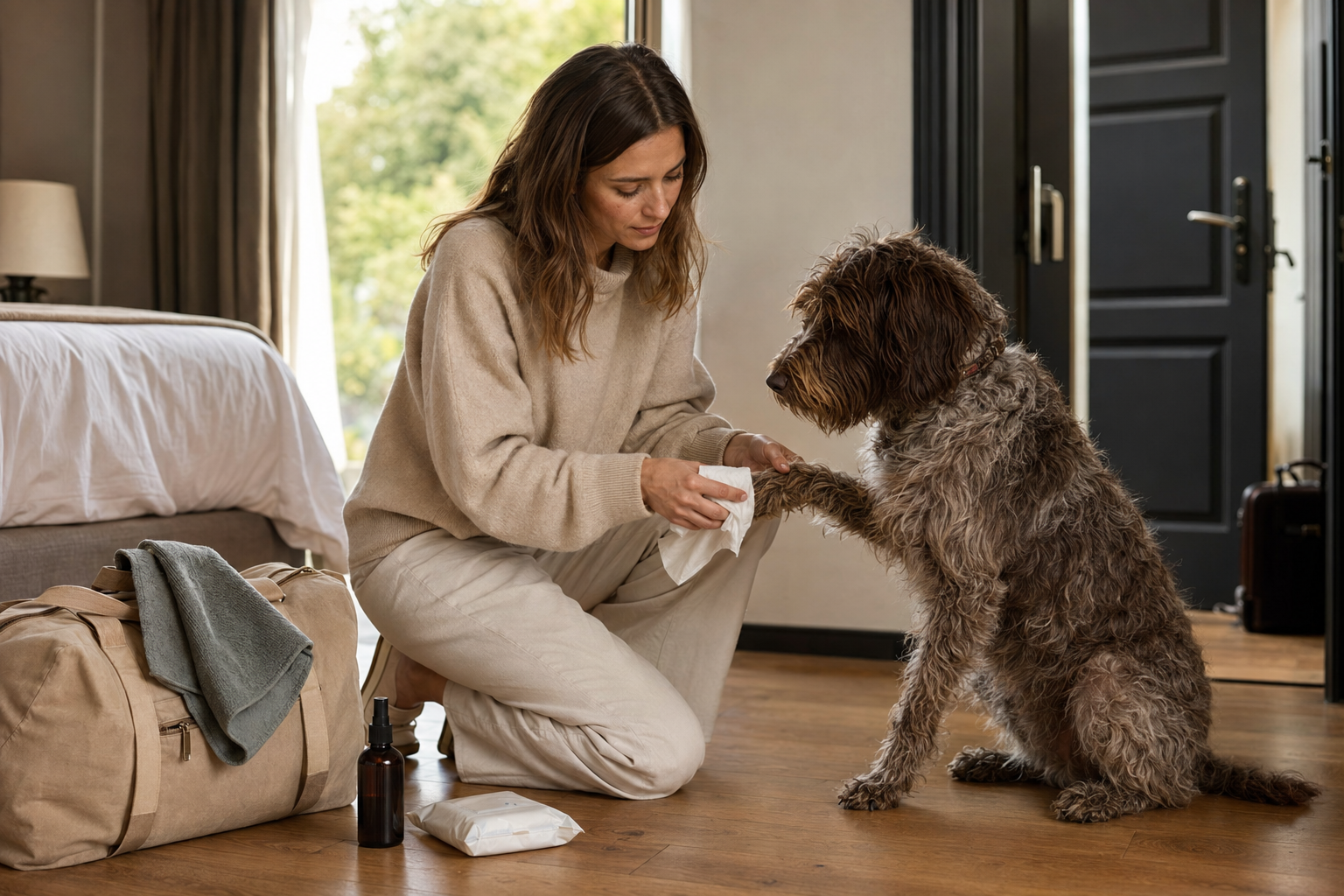
Upon return, examine the paw pads and spaces between the toes. Remove sand, grass seeds, and small debris, and if water alone isn't enough – wash paws with a product designed for dogs. Thoroughly dry the skin, especially between the toes. Apply paw balm thinly to clean, dry, and unbroken skin. Do not use cosmetic products on blisters, bleeding, or painful burns.
TRAVEL RITUAL
After a walk – also on vacation
The "After Walk" set combines Lavender and Rosemary paw soap with paw and nose care balm. First remove dirt, then thoroughly dry paws and finish the ritual with a thin layer of balm on unbroken paw pads.
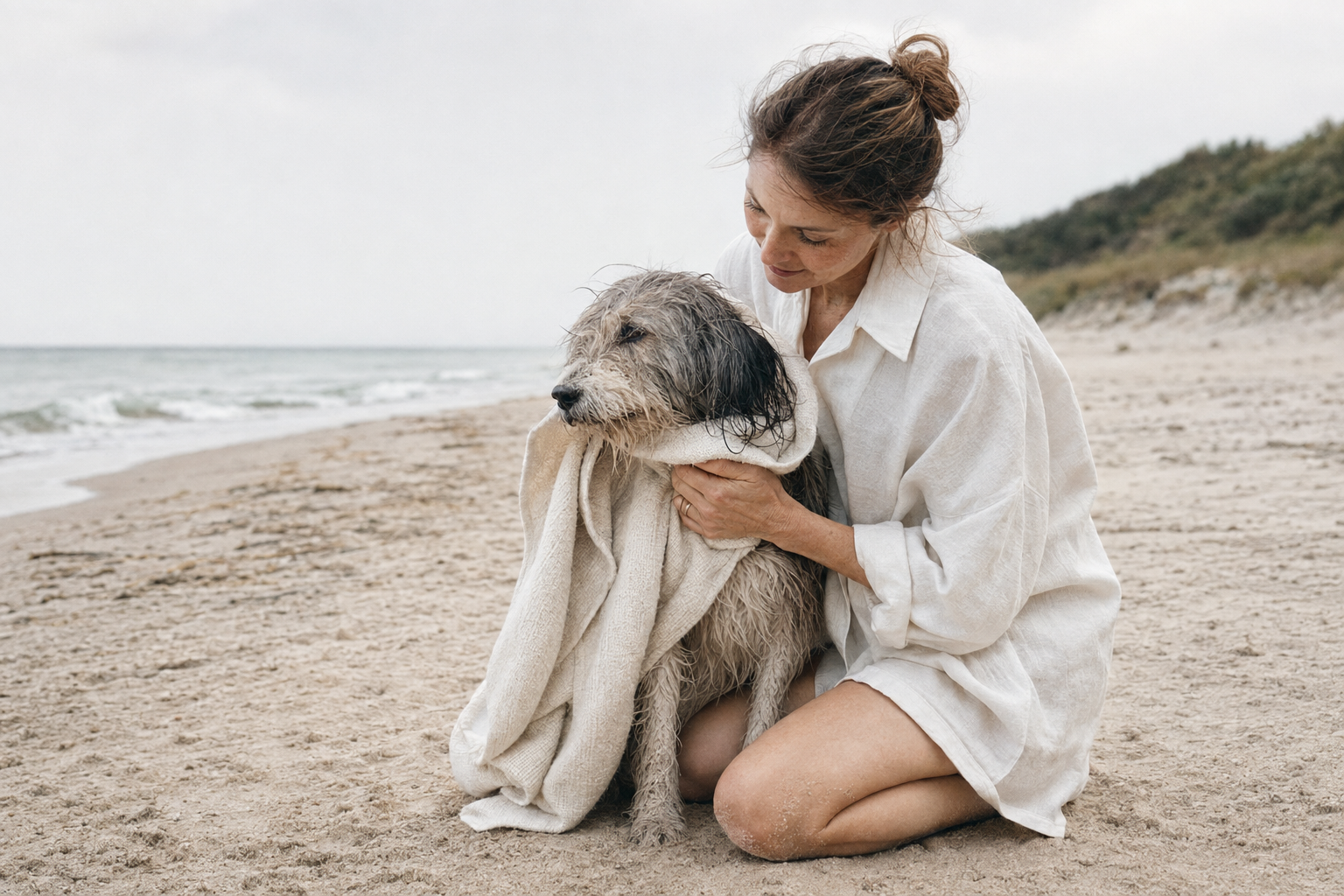
Discover the "After Walk" set →If you're going to the water, also check out the guide Dog at the sea and lake – how to care for fur after swimming?. For hot days, we've prepared a separate article: How to protect your dog from heat?.
How to pack your dog's bag so you don't have to search for everything on the way?
Divide items into two parts. In a small bag accessible during transit, put documents, water, a bowl, leash, poop bags, a towel, a portion of food, medications, and a basic first aid kit. The main luggage can hold spare food, the bed, toiletries, and items needed only upon arrival. This way, during checks, stops, or sudden messes, you don't have to open the entire suitcase.
Pre-trip checklist
- I check the microchip, ID tag, and current phone number.
- I pack the passport or health book and copies of documents.
- I verify the regulations of the destination country, transit, and return.
- I have confirmation that the accommodation accepts my dog.
- I write down the address of the nearest 24-hour vet clinic.
- I pack food for the entire stay and a small reserve.
- I put water and a bowl in an easily accessible bag.
- I take medications, dosage instructions, and a basic first aid kit.
- I check the leash, harness, carabiners, and carrier.
- I pack poop bags, a towel, a brush, and a car mat.
- I take a blanket or bed and one familiar toy.
- I pack paw and fur care products for after a walk.
- I check the weather, shaded routes, and access to water.
- Before departure, I note down the rules of the specific carrier.
FAQ — frequently asked questions
What absolutely must you take on holiday with your dog?
The most important items are documents and identification, familiar food, water, bowls, medications, a first aid kit, leash and harness, safe transport equipment, poop bags, a towel, a bed or blanket, and post-walk grooming supplies. A hand-carry bag should be sufficient for several hours, independently of the main luggage.
What documents are needed for traveling abroad with a dog?
For travel between EU countries, a dog generally needs a microchip, a valid rabies vaccination, and a European passport. Some countries require additional antiparasitic treatment, and travel outside the EU may require a health certificate or antibody test. Check the current regulations for each country on your route.
How much food should I bring for my dog on holiday?
Take portions for the entire stay and a reserve for at least one extra day. For specialized diets, it's best to assume it won't be available locally. Do not change the diet just before departure unnecessarily.
What should be in a travel first aid kit for a dog?
Gloves, sterile gauze pads, a bandage, saline solution, adhesive tape, safe scissors, a tick removal tool, and medications prescribed specifically for your dog. Add contact information for your regular vet and a local clinic. A first aid kit does not replace a veterinary examination.
How to safely transport a dog in a car?
Use a properly fitted carrier, a stably secured crate, or car safety harnesses according to the manufacturer's instructions. The dog should not roam freely in the cabin or be attached to the seatbelt by its collar alone. Make regular stops and never leave your dog alone in the car.
How to care for your dog's paws during holidays?
After a walk, inspect the paw pads and spaces between the toes, remove sand or plant seeds, wash paws if necessary, and dry them thoroughly. Apply paw balm thinly to clean, dry, and unbroken skin. Wounds, blisters, bleeding, or clear pain require veterinary consultation.

Leave a comment
This site is protected by hCaptcha and the hCaptcha Privacy Policy and Terms of Service apply.