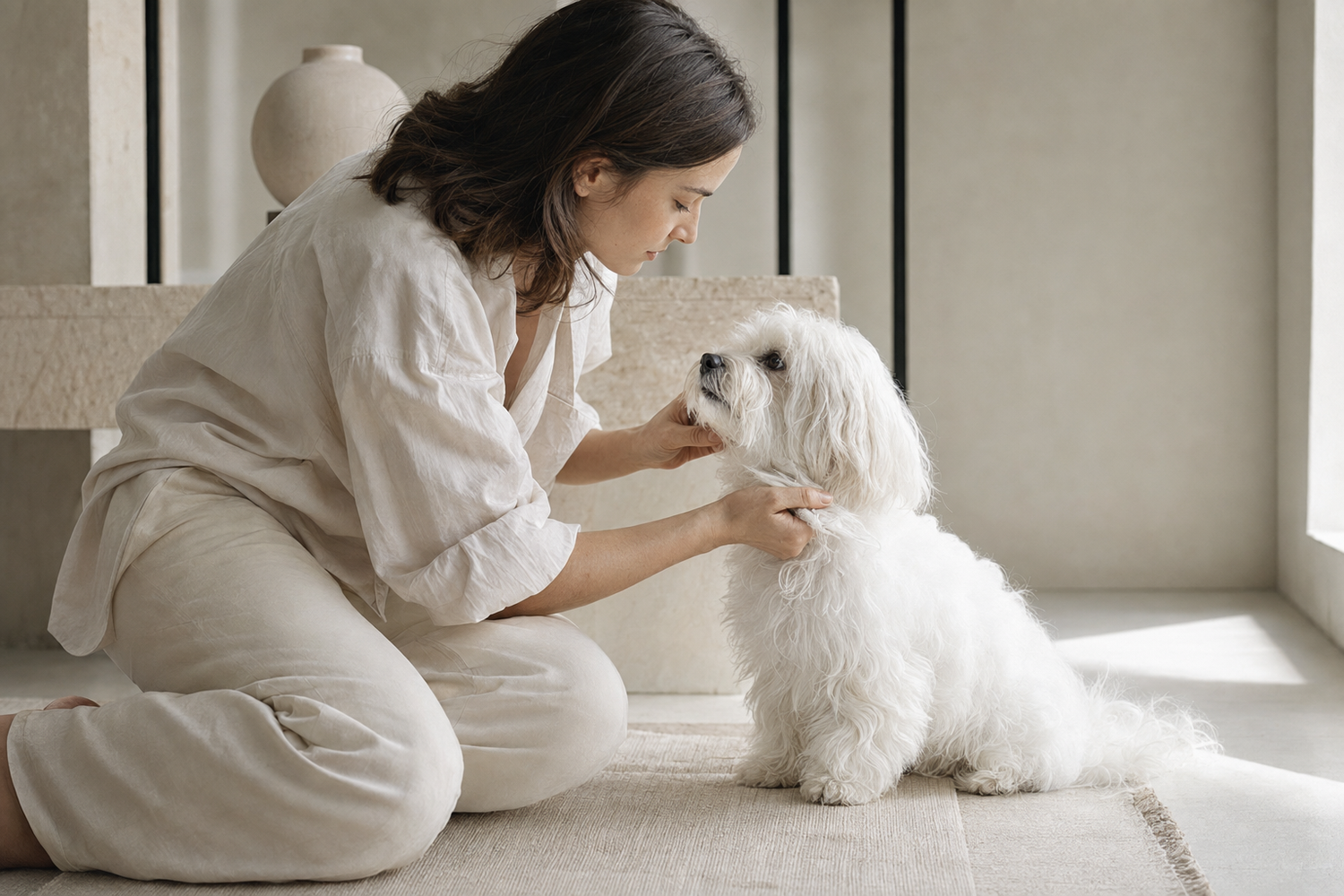
A dog's white coat does not require aggressive "whitening". It needs regular dust and moisture removal, thorough drying, gentle bathing when needed, and separate care for areas prone to tears and saliva. The most important thing is to distinguish between common dirt and a health signal.
Almost everything is visible on a light coat: dust after a walk, food residues around the muzzle, moisture under the eyes, and paw-licking marks. Not every color change signifies illness, but cosmetics should not mask a problem that appeared suddenly or is accompanied by itching, pain, or unusual discharge. A good routine therefore starts with observation, and only then with choosing a shampoo or powder.
In short: 6 rules for white coats
- Brush your dog regularly before fine dust combines with moisture and sebum.
- After a walk, clean the paws, belly, and muzzle locally; a full bath is not needed after every outing.
- Keep the hair under the eyes clean and dry, but do not rub the eye itself.
- Choose shampoo for dogs and use it exactly according to the label — without human brightening agents.
- Apply powder only to clean, dry fur under the eyes and away from the eyeball.
- For a sudden change, pain, itching, odor, or purulent discharge, start with a vet, not a cosmetic product.
Why does white fur yellow or change color?
"Yellowing" is a colloquial term for several different situations. Sometimes it refers to a dull film on a larger area of the coat, and sometimes to a distinct rusty stain in one spot. These cases require a different approach.
| Where is the change visible? | What can cause it? | First step |
|---|---|---|
| Entire coat or lower parts | Dust, mud, urban grime, sebum, incomplete rinsing, or frequent contact with wet surfaces. | Brushing, local cleaning, or proper bathing — depending on the degree of soiling. |
| Under the eyes | Tears containing porphyrins; muzzle structure and tear drainage; sometimes irritation, infection, or blocked tear ducts. | Gently clean and dry the fur; for a new or exacerbated problem, consult a vet about the eye. |
| Around the muzzle | Saliva, wet food, frequent drinking, or increased drooling. | Clean and dry the fur after eating; sudden drooling, bad breath, or difficulty eating require inspection. |
| On paws or in one spot | Repetitive licking, which leaves pigment from saliva; licking itself can result from itching, irritation, or pain. | Check the skin and spaces between toes; do not mask intense licking with cosmetics. |
Tear stains
The rusty or brown color of tear stains is associated, among other things, with porphyrins – pigments excreted in tears, which are much more visible on white fur. In some dogs, the structure of the muzzle and tear ducts plays a role. However, VCA Animal Hospitals points out that excessive tearing can also have other causes, such as irritation, infection, abnormal eyelashes, or a problem with tear drainage.
Therefore, do not judge the eye solely by the color of the hair. What matters is whether the tearing is new, unilateral, significantly greater than before, and whether the dog squints, rubs its eye with a paw, or has redness, swelling, or thick discharge. In such a situation, a veterinary evaluation is needed first.
Discoloration from saliva
Porphyrins are also present in saliva. White hair around the muzzle or on the paws can therefore eventually turn pink, rusty, or brown. The discoloration itself can be cosmetic, but continuous licking is important information. The dog may be reacting to itching, a wound, a foreign body between the toes, or pain. If the stain constantly returns in one place, washing alone will not solve the cause.
Daily grooming of white fur step by step
1. Quick check after a walk
Check paws, belly, chest and hair around the muzzle. Dry dust can often just be brushed off. If there is no irritating substance in the mud, let it dry slightly first, then remove with a brush or rinse locally with lukewarm water. After wet grass and puddles, thoroughly dry the lower parts of the fur.
2. Regular, gentle brushing
Brushing removes loose hair and dirt before it forms a dull film. For long or silky coats, brush in sections, starting from the ends and holding the hair close to the skin. Do not yank out tangles. If the fur is difficult to detangle, a conditioner suited to its type may be helpful — you can find more in the guide Dog conditioner — when is it needed and how to use it?.
3. Eye area care
If your vet has confirmed that minor tearing is typical for your dog and not due to illness, remove moisture and dried discharge very gently. Use a product recommended by your vet, sterile saline intended for appropriate use, or a clean, slightly moistened cloth. Soften hard deposits first – do not tear them off forcefully.
Move along the surface of the eyelid and fur outwards, without rubbing the eyeball. Use a separate pad or clean part of the cloth for each eye. Finally, dry the hair thoroughly. If the dog is undergoing eye treatment or has had surgery, follow only the plan provided by the vet.
4. Cleaning the muzzle and paws
After a wet meal, remove any residue from the fur around the muzzle, and after drinking, gently dry a long beard. Clean paws when they get dirty, paying attention to the spaces between the toes. This simple routine limits the time light fur stays wet and allows for quicker detection of irritation.
5. Drying without harsh rubbing
Blot water with a towel instead of vigorously rubbing the hair. With long fur, rubbing creates tangles. If you use a dryer, choose a gentle airflow and a safe distance, controlling the temperature with your hand. A damp undercoat may look clean on top but remain wet at the skin.
How to properly bathe a white-coated dog?
The color of the coat is not an indication for more frequent bathing. Bathe your dog only when the coat is actually dirty, has an odor, or an individual plan requires it. Too frequent washing will not "fix the white" and may dry out the skin. The frequency is determined by skin condition, hair type, activity, and vet recommendations, not just the color.
- Brush dry fur. Remove loose dust and minor tangles before wetting.
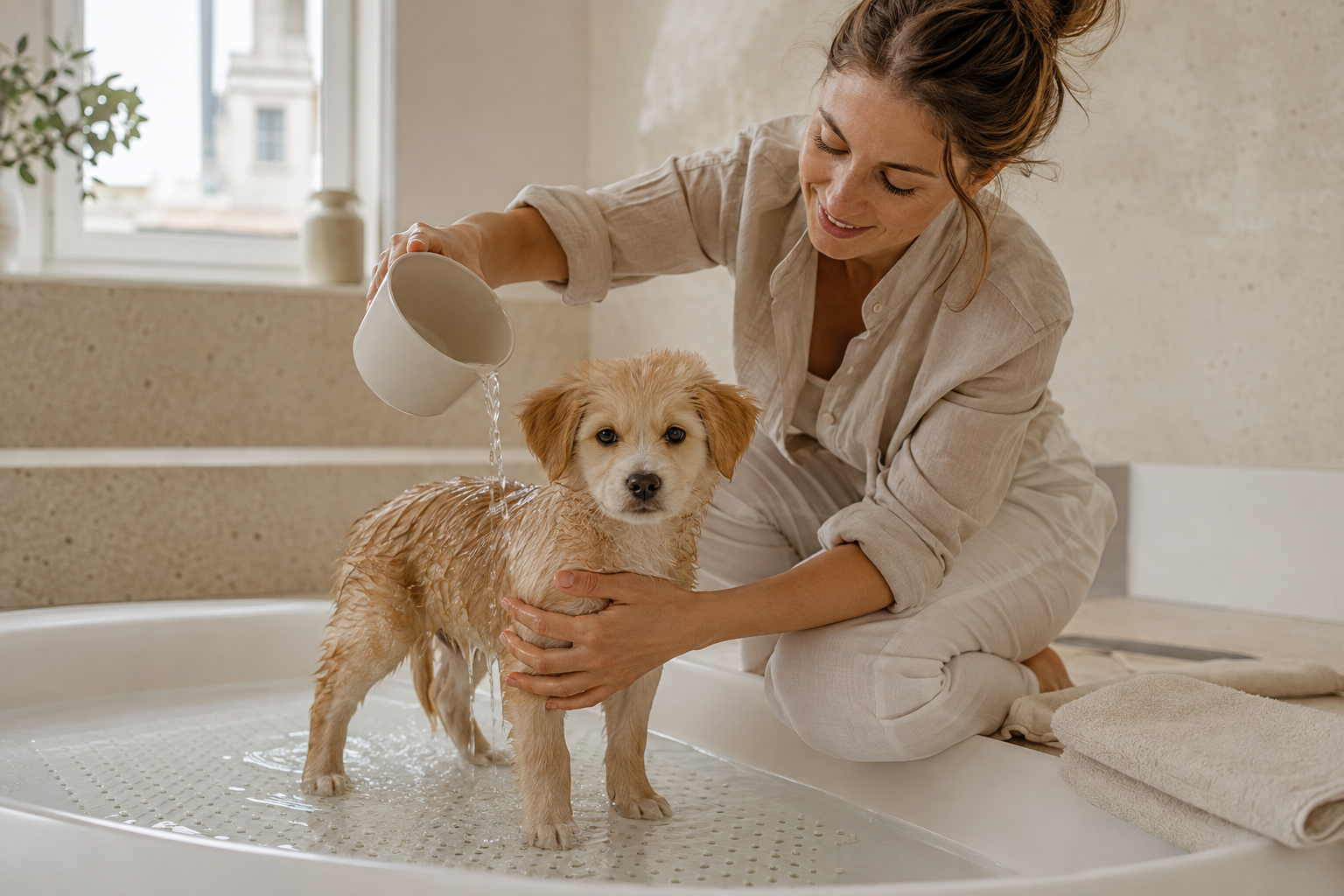
- Wet the dog with lukewarm water. Check the temperature with your hand and do not direct the stream into the eyes or ears.
- Apply dog shampoo. Distribute it evenly on the coat according to the label, avoiding contact with eyes, nose, and inside of the ears.
- Wash calmly. Focus on the genuinely soiled areas; do not aggressively rub the skin or already irritated spots.
- Rinse very thoroughly. Cosmetic residue can cause discomfort and make the hair look dull.
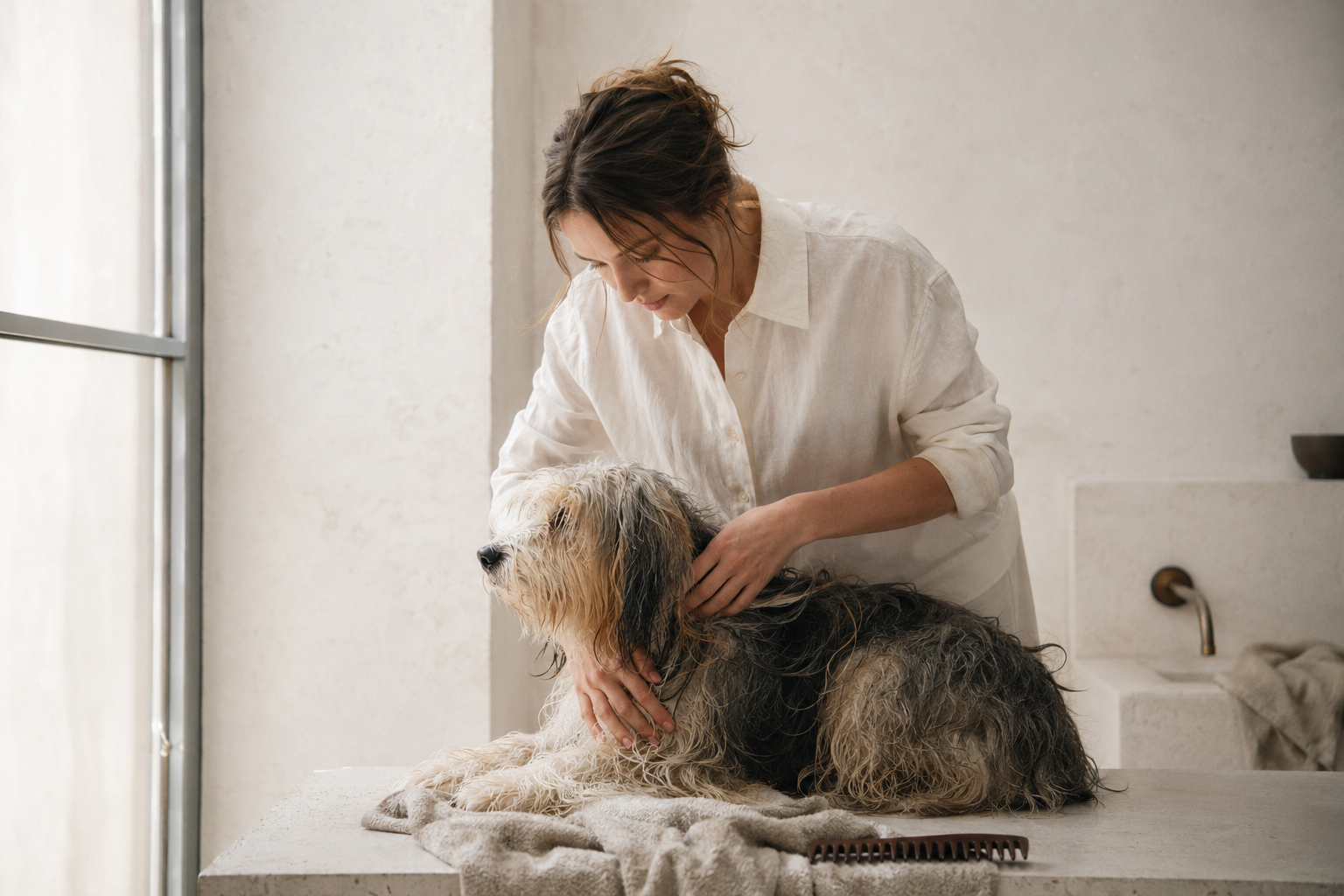
- Dry and comb. Gently blot water with a towel, dry with a gentle airflow, and comb the fur without tugging.
Shampoo with pigment, designed for white and light-colored coats, can support its fresh, well-groomed appearance after bathing. However, it is still a cleansing cosmetic: it does not treat tearing, allergies, or infections and should not be used as a topical eye preparation.
PetsChoice.Club Ritual
Full coat bath and precise eye area care
Shampoo for white and light coats contains purple pigment and conditioning ingredients. It is applied to wet fur during bathing, thoroughly rinsed, and kept away from the eyes, nose, and ears.
Powder for eye area care is a separate step: a small amount is applied to clean, dry fur under the eyes and gently spread without contact with the eyes, nose, and muzzle. Do not use on broken or irritated skin.
See shampoo → See powder →What not to do with white fur?
- Do not use bleach or fabric cleaners. These substances are not intended for contact with a dog's skin.
- Do not reach for human "silver" or "blonde" shampoos. Choose a product specifically designed for dogs.
- Do not experiment around the eyes with hydrogen peroxide, lemon, vinegar, or baking soda. The eye area is sensitive, and accidental contact can cause irritation.
- Do not mask intense licking. Rusty fur on a paw is a trace; the cause may be itching, pain, or irritation.
- Do not apply powder to wet or damaged skin. First, gently clean and thoroughly dry the fur.
- Do not trim hair close to the eye with regular scissors while the dog is moving. Entrust safe trimming of this area to an experienced groomer.
- Do not expect immediate removal of a set-in stain. Grooming can gradually improve the appearance of new and regularly cleaned hair, but it will not always reverse existing discoloration.
FAQ — frequently asked questions
How often should I bathe a white-coated dog?
Not more often just because the fur is white. Bathe when the coat is actually dirty, has an odor, or an individual plan requires it. Between baths, brushing, spot cleaning, and thorough drying are sufficient. For skin conditions, follow your vet's recommendations.
Does shampoo for white fur remove tear stains?
Shampoo cleans the fur and supports its fresh appearance after bathing, but it does not remove the cause of excessive tearing and must not get into the eye. Care for the area under the eyes separately. New, unilateral, or intensified tear stains should be evaluated by a veterinarian.
Why does my dog's white fur turn pink or rusty?
On light-colored hair, pigments present in tears and saliva are clearly visible. Therefore, marks often form under the eyes, around the muzzle, and on the paws. If the dog intensely licks one spot, has itching, pain, skin odor, or unusual discharge, it is necessary to find the cause, not just wash the stain.
How to care for the fur under the eyes daily?
If the vet has confirmed that slight tearing is typical, gently remove moisture and residue with a clean, slightly dampened cloth or a product recommended by the vet. Use a separate piece for each eye, do not rub the eyeball, and thoroughly dry the fur.
How to safely use tear stain powder?
Apply a small amount only to clean and dry fur under the eyes, exactly according to the product instructions. Avoid eyes, nose, and muzzle. Do not use on irritated or damaged skin. If powder gets into the eye, rinse it with clean water.
When should I see a vet about tear stains or fur discoloration?
If the problem appeared suddenly, is worsening, affects only one eye or one paw, or is accompanied by redness, squinting, pain, swelling, intense licking, unpleasant odor, or yellow or green discharge. Cosmetics do not replace diagnosing the cause.

Leave a comment
This site is protected by hCaptcha and the hCaptcha Privacy Policy and Terms of Service apply.