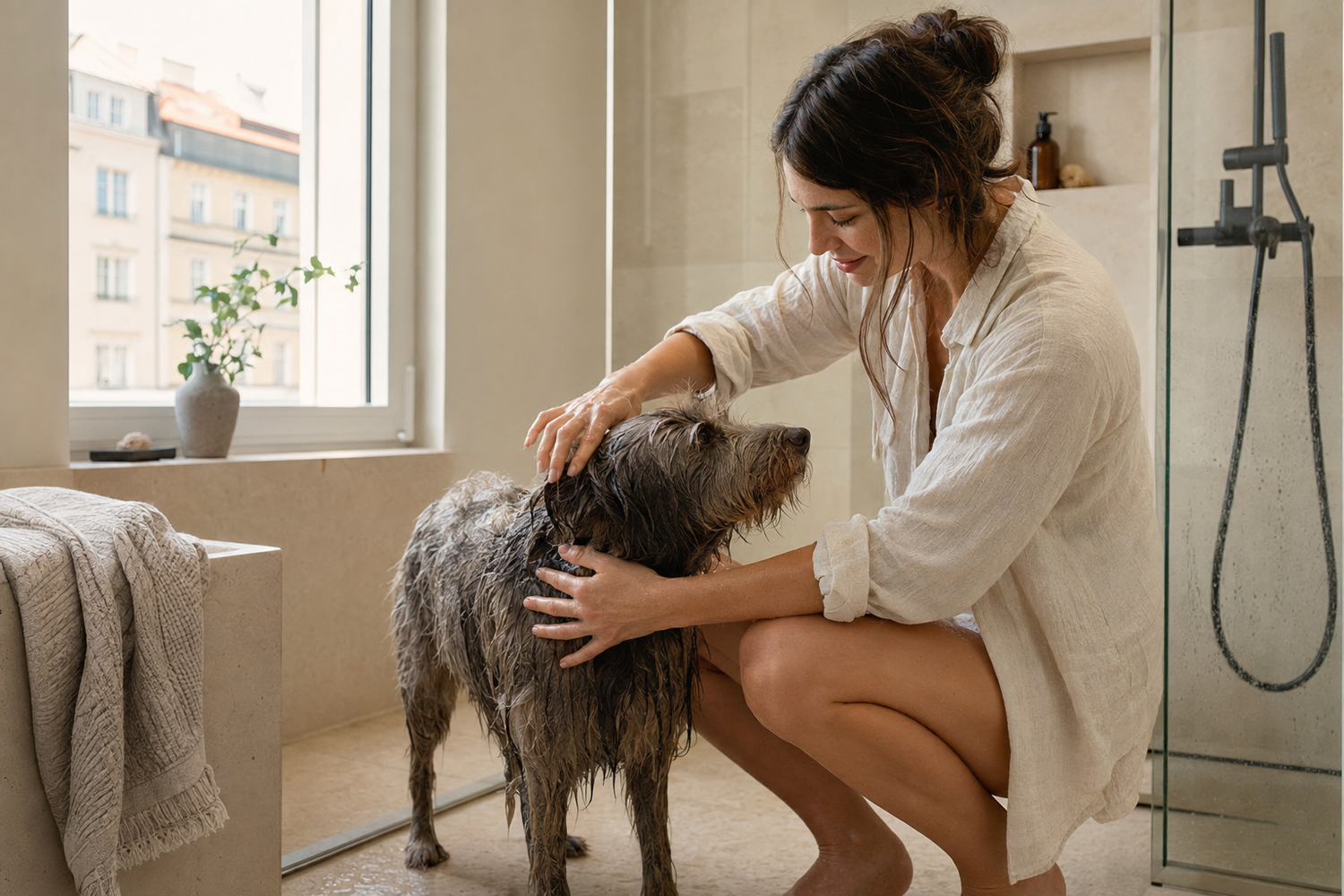
How often should you bathe your dog? You should wash a healthy dog when its skin and coat require it, not because a new week has started. For many dogs, a full bath every 4–8 weeks is a reasonable benchmark, but in the summer, activity, coat type, and what the dog has come into contact with are more important than a strict schedule.
After a dusty walk, a brush, a damp cloth, or just washing the paws is often enough. After swimming in the sea or a lake, a thorough rinse with clean water is needed first. Shampoo is used when water alone cannot remove dirt, residue, or an unpleasant smell. If the dog has a skin condition, the frequency and product should be determined by a veterinarian.
In brief: when to bathe your dog?
- Coat is clean, only slightly dusty: brush your dog or clean locally.
- Dog swam in the sea, a lake, or a pool: rinse thoroughly with clean water and dry; use shampoo if rinsing is not enough.
- Rolled in something, is muddy, greasy, or smells intensely: give a full bath with dog shampoo.
- Has itching, redness, flaking, or sores: do not experiment with frequent washing – consult a veterinarian.
Does your dog need to be bathed more often in the summer?
Not due to the temperature alone. However, summer changes lifestyle: more walks, dust, sand, swims in natural bodies of water, and weekends away from the city. Therefore, a dog may need more frequent cleaning, but not every cleaning has to mean a full bath with shampoo.
The MSD Veterinary Manual suggests bathing approximately once a month as a general guideline, depending on the season and dirtiness. VCA emphasizes that many healthy dogs are bathed occasionally when their coat is dirty or a noticeable odor appears; for non-shedding breeds that require regular grooming, an approximate interval may be around 6–8 weeks. These values are not mandatory schedules. One dog might need a wash after a muddy weekend, while another can be maintained for many weeks with a brush and local cleaning.
What determines bathing frequency?
1. Lifestyle
A city dog that mainly walks on dry pavement usually requires fewer full baths than a dog that regularly swims, runs in the forest, or rolls in the grass. Evaluate not only the appearance of the coat but also its smell, greasiness, and whether the dirt is localized or covers the entire body.
2. Coat type
Short, smooth coats can often be refreshed with a grooming glove or a damp cloth. Long, silky, and curly coats require regular detangling, as bathing without prior removal of mats can tighten them further. Dense undercoats need to be rinsed and dried very thoroughly – moisture remaining next to the skin is not the goal of summer grooming.
3. Skin condition
Healthy skin, sensitive skin, and dermatologically treated skin require different plans. Medicated baths can be given several times a week, but then the frequency, contact time, and product are part of a therapy prescribed by a veterinarian. Such a regimen should not be applied to a healthy dog, nor should a medicated shampoo be replaced with a cosmetic one.
4. Age and bath tolerance
A puppy needs a gentle product for dogs and calm acclimatization to water, towels, and drying. An older dog may have joint and balance problems, so an anti-slip mat, a short bath time, and a comfortable position are more important than frequency. Grooming should be effective, but it should not cause unnecessary stress to the dog.
Summer situations: water, shampoo, or just a brush?
| Situation | What to do? | Is shampoo needed? |
|---|---|---|
| Dust after a dry walk | Wait until the coat is dry, then brush it; clean paws locally. | Usually not. |
| Wet mud on paws and belly | Rinse the soiled areas with lukewarm water and dry thoroughly. | Only if water doesn't remove dirt or odor. |
| Swimming in the sea | Rinse salt and sand with clean water, check skin and spaces between toes. | If residue, stickiness, or odor remains. |
| Swimming in a lake | First, ensure the water was safe, then rinse and dry the dog. | Depending on coat condition; not automatically after every swim. |
| Rolling in feces, carrion, or a greasy substance | Full bath and very thorough rinsing. | Yes; for unknown substances, contact a vet first. |
| Itching, redness, pustules, or strong skin odor | Stop cosmetic experiments and schedule a consultation. | Only a product recommended or approved by a vet. |
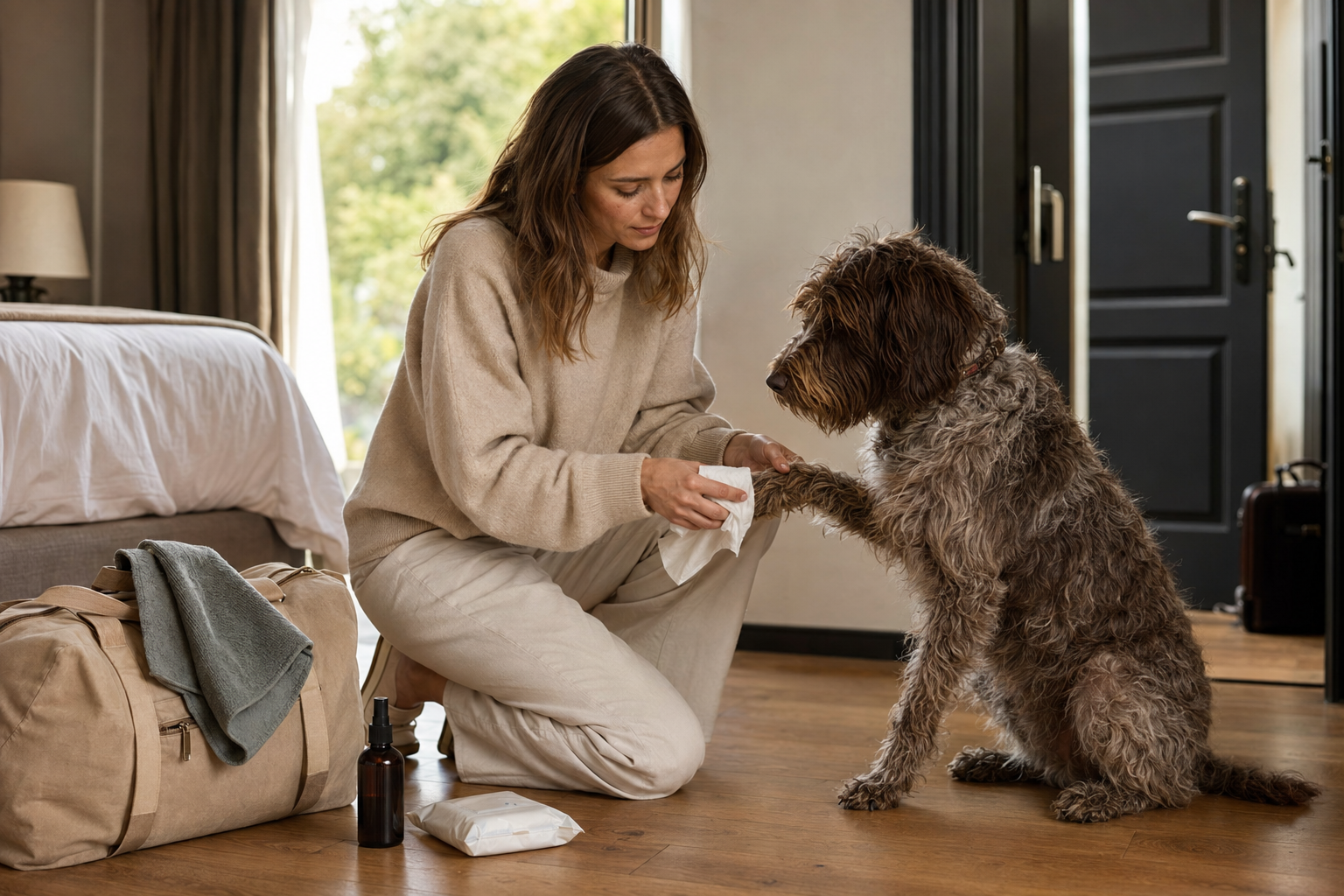
After swimming, follow the full ritual described in the guide Dog at the seaside and lake - how to care for the coat after swimming?. If you only need quick cleaning of paws and belly during a trip, also check the material on dog hygiene when traveling.
Choosing a dog shampoo: what matters?
The most important thing is not which variant smells the best. A good choice starts with the question: what does my dog's skin and coat need? Only use shampoo developed for dogs. Their skin differs from human skin, so shampoo for adults or children is not the right product for routine bathing.
- Skin condition: for fragrance sensitivity, choose a gentle, fragrance-free formula. For disease symptoms, a diagnosis is needed first.
- Age: for a puppy, choose a product specifically designed for young dogs.
- Coat type and color: after considering the skin, you can choose a formula for white, red, dark, or a coat requiring smoothing.
- Frequency: when bathing occurs more often, a gentle formula, thorough rinsing, and observation of skin reaction are particularly important.
- Instructions: check if the product needs to be diluted, how long it should remain on the coat, and if it requires a subsequent grooming step.
PetsChoice.Club's simple selection guide
- Dog requiring grooming without intense fragrance: fragrance-free shampoo for gentle cleaning.
- Puppy: shampoo formulated for puppy grooming.
- White, red, or dark coat: a variant matched to the coat color, if the skin is healthy and tolerates the cosmetic well.
- Daily, universal grooming need: a gentle dog shampoo matched to the coat type and bathing frequency.
Coat color should not be more important than skin comfort. If your dog reacts poorly to the fragrance, scratches after bathing, or has a diagnosed dermatosis, do not choose solely based on visual effect and ask your veterinarian for a recommendation.
Shampoo selection
Need first, then scent
In the PetsChoice.Club collection, you'll find a fragrance-free variant, a formula for puppies, and shampoos for grooming white, red, and dark coats. Choose a product based on your dog's age, skin, and coat type — and if you're unsure, write to us.
Choose shampoo for your dog →How to properly bathe your dog in summer?
- Brush dry fur. Remove loose sand, plant debris, and slight tangles before wetting.
- Prepare a safe place. Use an anti-slip mat, have a towel handy, and do not bathe your dog in full sun.
- Use lukewarm water. Extremely cold water is not a good way to "cool down," and hot water increases discomfort.
- Thoroughly wet the fur. For a dense undercoat, you'll need time for the water to reach the entire coat.
- Apply shampoo according to the label. Avoid eyes, nose, and inside the ears. Do not extend the contact time on your own.
- Rinse longer than your first impression suggests. Product residues can irritate the skin and attract dirt.
- Apply conditioner if needed. Long, dry, or tangled fur may require additional smoothing according to product instructions.
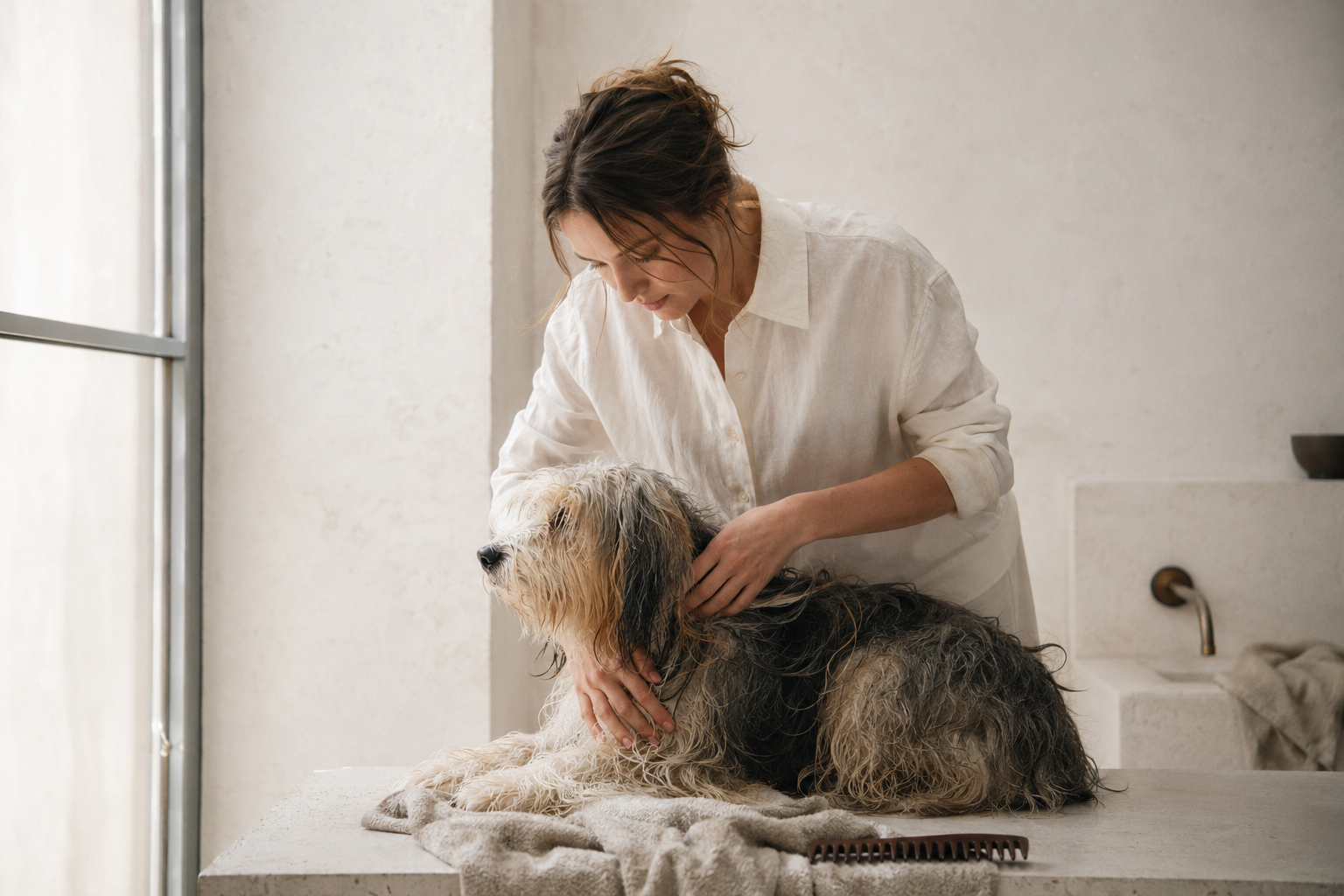
- Dry without strong rubbing. Blot water with a towel, and keep the dog in a warm, airy, but draft-free place until dry.
In summer, do not leave a wet dog in strong sun and do not immediately put a harness on damp fur. Check armpits, groin, spaces between toes, and areas under the collar – this is where water can remain longest.
When is bathing too frequent?
VCA notes that too frequent bathing can disrupt the natural lipid layer, reduce coat quality, and promote dryness, itching, and irritation. The risk increases when the wrong shampoo is used, the product remains on the skin, or bathing replaces a simpler solution, such as brushing or local rinsing.
After each bath, observe the dog for the next 24–48 hours. If it scratches more often, licks its paws, has red skin, flaking, or a dull coat, check the frequency, rinsing method, and the cosmetic used. Persistent or recurring symptoms should be discussed with a veterinarian.
FAQ – frequently asked questions
How often should you bathe your dog in summer?
For many healthy dogs, a full bath approximately every 4–8 weeks is a reasonable benchmark, but not a strict rule. Wash your dog when its coat is truly dirty, sticky, or noticeably smelly. Between baths, use brushing, rinsing, and local cleaning.
Can you bathe your dog every week in summer?
Not every dog needs it. Weekly washing with an inappropriate product can dry out or irritate the skin. If activity or health status requires frequent baths, the choice of product and routine should be determined with a veterinarian. Medicated baths are performed only according to their recommendations.
Does a dog need shampoo after every swim?
No. After the sea, a lake, or a pool, first rinse the coat thoroughly with clean water and dry the dog. Shampoo is needed if salt, sand, residue, stickiness, visible dirt, or an unpleasant odor remain.
Can you wash a dog with human or baby shampoo?
For regular grooming, only use shampoo developed for dogs. Their skin has different properties than human skin, so even a gentle baby shampoo may be too irritating.
What shampoo should I choose for a dog with sensitive skin?
Choose a gentle formula for dogs, preferably without added fragrance, and observe the skin's reaction. If sensitivity means itching, redness, dandruff, sores, or recurring skin odor, first consult a veterinarian – the dog may need a medicated product, not just another cosmetic.
How can you tell if a dog is being bathed too often?
Signs may include dryness, flaking, dull coat, redness, and increased scratching or licking after bathing. Reduce the frequency, ensure you rinse the product thoroughly, and contact a veterinarian if symptoms persist.

Leave a comment
This site is protected by hCaptcha and the hCaptcha Privacy Policy and Terms of Service apply.